LICENSED NOTARIAL SERVICES ATTORNEYS × 6
ทีมทนาย Notary Public 6 ท่าน · รับรองโดยสภาทนายความในพระบรมราชูปถัมภ์

NAATI FAQ · 100 Top Questions

Curated from the 500 highest-intent NAATI queries by Australia/NZ visa applicants in 2026. Every answer written from scratch by NYC's in-house NAATI Certified Translator team — unique worldwide.

🧭 Basics · Pricing · Process (20 Q)

Q1. What is a NAATI translation and why is it required for Australia?

NAATI (National Accreditation Authority for Translators and Interpreters) is Australia's sole standards body for translators. Documents translated and stamped by a NAATI Certified Translator (CT) are accepted by every Australian federal and state agency without further legalisation, making them the safest option for visa, licensing, and academic submissions.

Q2. Do I strictly need a NAATI translator for an Australian visa?

Yes for practical purposes. The Department of Home Affairs (DHA) requires translations to be from an accredited translator; using NAATI removes the risk of case officers rejecting the source. Non-NAATI translations may be accepted but expose you to RFIs and delays.

Q3. What is the difference between NAATI and a regular certified translation in Thailand?

A regular Thai certified translation is signed by a translator or agency; a NAATI translation carries a CPN-registered stamp verifiable in real time on naati.com.au. The latter meets Australia's evidentiary standard; the former usually does not.

Q4. Can I use a Thai Notary Public instead of a NAATI translator?

No. A Notary attests to signatures or copies, not to translation accuracy. Australia specifically requires accuracy attestation, which only NAATI (or an equivalent overseas body) can provide.

Q5. How much does a standard NAATI translation cost in Thailand?

From THB 500 per page for driving licences, THB 800–850 for birth certificates, house registrations, and marriage certificates. Bundles for Partner Visa (10 documents) start at THB 7,500; Skilled Migration (15 documents) at THB 11,000.

Q6. Is NAATI translation charged per word or per page?

NYC charges per A4-standard page for clarity. Longer documents exceeding ~500 words per page (e.g., employment contracts) incur a documented surcharge disclosed before work begins.

Q7. How long does a standard NAATI translation take?

Standard turnaround is three business days. Express 24-hour service adds 50%; same-day (ordered before 10:00) adds 100%. Single simple documents can be delivered within four hours in urgent cases.

Q8. Can I get same-day urgent NAATI translation in Bangkok?

Yes, subject to translator availability. Orders placed before 15:00 with clean scans of ≤3 documents can be delivered by end of business day. A confirmation is issued within 30 minutes of enquiry.

Q9. How do I submit documents online for NAATI translation?

Send high-resolution PDFs (≥300 dpi) via LINE @nycplus or email. NYC replies with a quote and ETA within 30 minutes during business hours. Files return through the same channel as stamped PDFs, with EMS hardcopy available on request.

Q10. Does NAATI require an original wet-ink signature or is a digital stamp accepted?

DHA has accepted digital NAATI stamps since 2020. Every stamped PDF includes a QR code linking to the translator's public NAATI record, providing stronger verification than wet-ink.

Q11. Will DHA accept a scanned PDF NAATI translation?

Yes. ImmiAccount accepts PDFs up to 5 MB per file. Best practice is to combine the source document and translation into a single PDF so the case officer can cross-check on one screen.

Q12. How long is a NAATI translation valid for?

The translator's certification is valid for three years, but the translation itself is timeless. However, DHA may request re-translation if the underlying document (e.g., Police Clearance) has expired or been reissued.

Q13. Do I need to translate my Thai ID and house registration for a student visa?

Subclass 500 typically requires birth certificate and evidence of sponsorship, not the ID card. House registration is only required if you must prove address or family relationship as part of a Statement of Support.

Q14. How much is a NAATI translation for a Thai birth certificate?

THB 800 for standard 3-day turnaround, delivered as a stamped PDF. Express 24-hour delivery is THB 1,200. EMS hardcopy within Thailand adds THB 80.

Q15. Do name and surname change certificates always need NAATI translation for an Australian visa?

Yes. DHA must trace your full name history to link records. Every change document should be translated, priced individually at THB 700 or bundled as three-in-one for THB 1,800.

Q16. How do I verify a NAATI translator?

Visit naati.com.au → Practitioner Directory → search by CPN or name. The listing shows level (CT/CAT), language pair, and expiry. If a translator is not listed, their stamp is not valid.

Q17. Can a standard Thai lawyer or Notarial Services Attorney provide NAATI translation?

No. Only individuals with a current NAATI credential in the required language pair may stamp translations. NYC's Notarial Services Attorneys and NAATI CTs work as one team but the roles remain separate on paper.

Q18. Where can I find a fast NAATI translator in Udon Thani?

NYC ships stamped PDFs Bangkok-to-Udon within four hours via email; EMS hardcopy arrives next business day. Regional expats need not travel for this service.

Q19. Are there NAATI translation services with EMS delivery from Khon Kaen?

Yes. NYC processes Khon Kaen client orders remotely and dispatches from Bangkok via EMS with tracking. Same-day EMS drop-off before 15:00 delivers next morning to any Thai province.

Q20. What is the best translation agency for urgent NAATI services in Phuket?

NYC has serviced Phuket clients (medical tourism operators, dive instructors, Australian expats) since the firm was registered. All work is handled remotely with digital delivery within 24 hours.

📑 Document Types (20 Q)

Q1. Can I find a NAATI office near the Australian Embassy in Bangkok?

The Australian Embassy on Wireless Road no longer hosts on-site translators. NYC's Sukhumvit office is a 10-minute drive; most clients prefer digital delivery and never visit either location.

Q2. How much is NAATI translation for a Thai marriage certificate?

THB 850 per page, delivered in 2–3 business days. Bundled marriage packages (marriage + change-of-name + single certificate) are THB 2,400, saving 15%.

Q3. Is a NAATI translation of my driving licence enough for VicRoads?

Yes. VicRoads accepts a NAATI translation to convert a Thai licence within six months of arrival. Priced at THB 500 with 24-hour turnaround.

Q4. What is the cost of a NAATI degree + transcript bundle?

THB 1,800 for degree + transcript. Multi-semester transcripts are billed per additional page. Format follows AQF standards with grading conversion for WES and Engineers Australia.

Q5. Do I need to translate my Thai Police Clearance for a visa?

Yes for every visa involving 12+ months residency. THB 900 per document. Translate within 30 days of issue so the DHA 12-month validity window remains open.

Q6. How is a 6-month bank statement translated?

By page. A 6-month statement averages 12–24 pages at THB 400/page (THB 4,800–9,600 total). NYC offers a Certified Balance Summary at 30% savings if the statement is used only for financial capacity evidence.

Q7. Does the ส.ด.43 (military exemption) need NAATI translation?

Yes for partner and PR visas, as DHA verifies national service obligations. THB 700 per certificate. Same pricing applies to ส.ด.8 (discharge).

Q8. How many change-of-name certificates need to be translated?

All of them. DHA traces every historical name change. NYC offers three-certificate bundles at THB 1,800 (individual THB 700 each).

Q9. How long does translating a single certificate take?

1–2 business days after receiving a clean scan. Express 12-hour delivery adds 50%. Single certificates expire in 3 months, so batch translation just before visa submission is optimal.

Q10. Can multiple diplomas be combined into one file?

Yes for delivery, but pricing is per certificate (THB 500 each). Bachelor + Master bundles are THB 900; Bachelor + Master + PhD bundles THB 1,300, saving up to 30%.

Q11. When is a NAATI death certificate translation needed?

For managing an Australian estate or changing marital status to widowed before a new Partner Visa application. Priced at THB 800; often bundled with the deceased's house registration for cross-verification.

Q12. Can a Thai Power of Attorney be NAATI translated?

Yes, but for cross-border validity, draft the POA bilingually, have a Thai Notary attest signatures, then NAATI stamps the translation. Total cost THB 2,500–3,500.

Q13. What is the price for translating a Thai title deed?

THB 800–1,200 per certificate depending on the appendix. Mortgages or encumbrance annexes add THB 400 per additional page.

Q14. Do medical certificates need NAATI for AHPRA registration?

Yes. AHPRA and Australian visa medical panels accept only NAATI translations from a MOH-registered hospital. Priced at THB 700 per document.

Q15. What documents does a Thai nurse need for AHPRA + ANMAC?

Nursing licence, transcript, and Bachelor of Nursing. Bundle price THB 2,400. Optional Statement of Service adds evidentiary weight for the Modified Skills Assessment.

Q16. What documents does a Thai medical practitioner need for AMC?

Medical practising licence, transcript, and internship certificate. Bundle price THB 2,800. AMC accepts only NAATI translations for foreign qualification recognition.

Q17. Are employment contracts translated for Skilled Migration?

Yes. Contracts must map to ANZSCO occupation codes. THB 800–1,500 per contract depending on length. Bundled with an employer reference letter for optimal case-officer readability.

Q18. How is a Statement of Service translated?

Following VETASSESS/EA/AACA templates: role, duties, hours per week, salary, start–end dates. THB 1,000–1,500 per statement. Employers may issue in English directly to reduce cost.

Q19. Do wedding advertisements or Facebook captions need translation?

Photos do not; Thai captions and comments submitted as Genuine Relationship evidence do. Priced per word; a 50-caption package averages THB 3,500.

Q20. What is the fastest realistic delivery for a single certificate?

Two hours in true emergencies for standard certificates delivered by digital stamp. Requires clean scan on receipt, spelling confirmation from client, and translator availability.

🌏 Visa · Skill Assessment · Cross-border (20 Q)

Q1. Does VETASSESS require NAATI translations?

Yes. VETASSESS explicitly requires NAATI-certified translations for foreign-language documents. Machine or self-translation results in a Refused assessment and loss of the ~AUD 1,100 fee.

Q2. Does AHPRA accept translations from Thailand?

Only from NAATI CTs. A Certificate of Accuracy must accompany each translation. NYC dispatches PDF and hardcopy EMS to AHPRA offices Australia-wide.

Q3. Does Engineers Australia (EA) MSA accept NAATI?

Yes. The CDR must be written directly in English (not translated), but transcripts, degrees, and employer references must be NAATI-translated. Thai-language work evidence must also be translated.

Q4. What does TRA need translated?

Vocational certificates (ปวช./ปวส.), transcripts, and Statement of Service from every employer. Used for subclass 482/186 trade skill assessments. Five-document bundle from THB 4,500.

Q5. What does Partner Visa 820/801 require?

Applicant's birth certificate, house registration, Police Clearance, marriage/divorce certificate (if applicable), Statement of Support, and Genuine Relationship evidence. Ten-document bundle THB 7,500.

Q6. What is needed for Prospective Marriage (300) visa?

Birth certificate, Police Clearance, single certificate, Notice of Intention to Marry (Australia), plus 12 months of face-to-face evidence. The single certificate must be issued within three months of submission.

Q7. Does Working Holiday 462 require translated PCC?

Yes. WHV 462 for Thai citizens requires Police Clearance plus a Bachelor's Degree (proving ≥2 years of university). Three-document bundle from THB 2,200.

Q8. How many documents does a Skilled Migration application need?

Typically 15–25: transcript, degree, employer references for each role, PCC from every country of 12+ month residence, birth certificate, and house registration. Bundled at THB 11,000 for 15 documents.

Q9. Can NAATI be used for a New Zealand visa?

Yes. Immigration NZ accepts NAATI on par with NZSTI. NYC's translators hold both credentials so the same file works for both jurisdictions.

Q10. What is required for a NZ student visa?

Transcript, diploma, financial statement, and Police Clearance (if aged 17+). Bundle of five documents from THB 4,000. INZ requires all documents in English.

Q11. Can NAATI translations be used in Canada or USA?

No. Canada requires ATIO/OTTIAQ; USA requires ATA-certified or notarised translations. NYC's Sworn Translator service handles those jurisdictions separately.

Q12. Does UK Home Office accept NAATI?

Yes. UKVI accepts translations from any accredited translation service. NAATI plus a Certificate of Accuracy and Statement of Truth in English satisfies the requirement.

Q13. Does Singapore ICA accept NAATI?

Generally yes, though ICA lists 'Notary Public or Sworn Translator in country of origin' as its baseline. NAATI is widely accepted; verify with ICA for edge-case visa categories.

Q14. Does Hong Kong Immigration accept NAATI?

Yes. HK immigration accepts certified translations from any accredited translator in the country of origin. Adding a Thai Notary attesting to the translator's signature is safest for complex cases.

Q15. Does Malaysia accept NAATI translations?

For Employment Pass and Long-Term Social Visit, yes. Malaysia My Second Home (MM2H) applications sometimes require additional notarisation of translator identity.

Q16. Are NAATI translations valid at the AAT (Administrative Appeals Tribunal)?

Yes and required. AAT accepts only English documents translated by NAATI. Self-translated or non-accredited translations are not admitted as evidence.

Q17. Can NAATI translations be used in the Family Court of Australia?

Yes. Family Court accepts NAATI. Advanced (CAT) level is recommended for court filings; the translator's affidavit accompanies the translation.

Q18. What does Centrelink/Medicare require for Thai spouse enrolment?

Marriage certificate for spouse, birth certificate for dependents, divorce or death certificate if applicable. Three-document bundle THB 2,400.

Q19. What documents are needed for Departing Australia Superannuation Payment (DASP)?

Passport, departure evidence, Tax File Number certificate, and ATO Notice of Assessment. Adding a Thai PND 90/91 can reduce Withholding Tax under the Australia–Thailand Double Tax Agreement.

Q20. What if DHA rejects a translation?

NYC re-issues free within 30 days if the fault is translator-side. If updates are required due to RFI on document content, a 50% service fee applies. All work carries Professional Indemnity insurance.

🔬 Deep-dive · Troubleshooting (20 Q)

Q1. How do I verify a translator's CPN?

Search the CPN on naati.com.au. The record displays credential level, language pair, and expiry date. Absence from the directory means the credential is invalid or expired.

Q2. Is a translation still valid after the translator's certification expires?

Yes. Validity is tied to the date of translation, not usage. If stamped while credentials were current, the translation remains valid, though DHA may still request a fresh translation of time-sensitive sources.

Q3. What is the difference between NAATI CT and CAT?

CT (Certified Translator) covers general documents; CAT (Certified Advanced Translator) requires additional exams and 200+ PD hours, suited to court, medical, and legal work demanding high technical accuracy.

Q4. How do JAA and AUSIT differ from NAATI?

NAATI is the accrediting body; AUSIT is the professional association handling ethics and CPD. JAA (Judicial Assistance Australia) is not applicable in Thailand. Most NAATI translators are also AUSIT members.

Q5. Is wet ink versus digital stamp treated differently by DHA?

No. Both have equal legal status since 2020. Digital stamps include a QR code for real-time verification, offering stronger provenance than wet-ink signatures.

Q6. What must a Statement of Accuracy contain?

The translator's name, CPN number, language pair, a declaration of true and accurate translation, signature, date, and location. NYC prints this on every translation as a footer block.

Q7. Should the source be attached to the translation?

Yes. DHA/AHPRA/EA typically want both source and translation in a single PDF: source on the left page, translation mirrored on the right for line-by-line comparison.

Q8. Must the translation match the source layout exactly?

As closely as practical, per NAATI's Code of Ethics. Seals, signatures, photos, and stamps are annotated as [SEAL], [SIGNATURE], [PHOTO] so case officers see the full record.

Q9. How are foreign-language seals within Thai documents handled?

Annotated and translated when legible. Illegible seals are marked [SEAL – illegible]. Third-language seals (Chinese/Japanese) are annotated and may require an additional translation from that language.

Q10. How are handwritten documents translated when hard to read?

The translator uses best effort and annotates [illegible – handwritten]. NYC recommends obtaining a transcribed version from the issuing agency before translation to eliminate ambiguity.

Q11. How are Thai names without prior English spelling handled?

The Royal Thai General System of Transcription (RTGS) governs, but passport spelling always overrides. Nicknames are annotated, not translated.

Q12. How are temple, school, and agency names translated?

Official English names are used when available; otherwise transliteration plus Thai annotation, e.g., 'Wat Phra Kaew (Temple of the Emerald Buddha)'. Schools usually have registered English names in the MoE database.

Q13. How are watermarks and coloured seals handled?

Annotated as '[Watermark: Garuda emblem]' or '[Red official seal]'. Colours are not reproduced in the translation body but are noted so case officers recognise the document as genuine.

Q14. What if the case officer asks for a reissue?

Forward the RFI to NYC. Reissue within 24 hours, with a cover letter explaining the change. Free for typographic or formatting fixes; a 50% fee applies for content updates due to source revisions.

Q15. Can expired documents still be translated?

Yes. NAATI translates the factual content of the source. However, DHA may reject the file if the document is time-sensitive (e.g., PCC valid 12 months). Renew the source first when possible.

Q16. Can torn or faded documents be translated?

Yes. NYC stamps 'Sighted damaged copy' and annotates illegible sections. Obtaining a certified copy from the issuing agency before translation reduces RFI risk substantially.

Q17. Are NAATI translations usable in Thai courts?

In limited cases. Thai courts typically require court-appointed or Ministry of Justice translators. NAATI is designed for foreign audiences; a Thai court interpreter is preferable for domestic litigation.

Q18. Can I combine NAATI with an Apostille?

Thailand is not yet a Hague Apostille member (joining 2027). Until then, the chain is Notary → MFA → Embassy. NAATI + MFA remains the standard combination accepted for AU/NZ.

Q19. Can Notary and NAATI be done at the same office?

Yes. NYC houses both Notarial Services Attorneys and NAATI CTs, saving 2–3 days versus separate providers. The Notary + NAATI + MFA package is THB 3,500–5,500 per document.

Q20. Does NAATI have a Thai branch?

No. NAATI certifies individuals only; no organisational branches. NAATI-certified translators resident in Thailand (with active CPNs) can deliver full-standard service without leaving the country.

🏢 Corporate · M&A · Tax (20 Q)

Q1. What corporate documents are needed for subclass 482 (Employer Sponsored)?

Company registration certificate, two years of financial statements, employment contract, position description, and skill match evidence. Eight-document bundle THB 6,500 with 3–5 day turnaround.

Q2. Do company financial statements require NAATI translation?

Yes for 482/186/187 nominations. Balance sheet, P&L, and auditor's report are translated. Two years of statements average 30–50 pages at THB 500/page. Listed companies may already publish English audited statements.

Q3. How are employer reference letters translated?

Along ANZSCO templates: role, duties in bullet points, employment type, weekly hours, dates, salary. NYC supplies free templates so employers issue documents in the correct format.

Q4. What does subclass 494 (Regional) require in addition?

Regional Employer Attestation and Regional Location Evidence. Ten-document bundle THB 8,000 with four-day turnaround. Often paired with 189/190 pathway documents.

Q5. What does a small-business owner need for subclass 132 (Investor)?

Company registration, shareholder register, four years of financial statements, personal net worth statement, and business plan. Twenty-document bundle THB 15,000 across 7–10 days.

Q6. Can franchise agreements be NAATI-translated?

Yes. CAT level is recommended given legal complexity. Franchise documents run 30–50 pages at THB 800–1,200/page (THB 25,000–50,000 typical) with 5–7 day turnaround.

Q7. How are Thailand–Australia MoUs and Letters of Intent translated?

In legal English by a CAT-level translator at THB 1,500/page. Five-to-ten-page MoUs average THB 7,500–15,000. Drafting bilingually from the start is more cost-effective.

Q8. Can trademark and patent documents be NAATI-translated?

Yes, though IP Australia expects 'Sworn Translation' quality. CAT level with a purpose-specific Statement of Accuracy for IP filing is standard. Priced at THB 2,000/page.

Q9. How is a Thai company extract translated?

Formatted for ASIC comparison: company name, registration number, capital, directors, registered address, and objects. THB 1,200 per certificate with 48-hour turnaround.

Q10. Should a Board Resolution be notarised before NAATI translation?

Yes. Signatures are notarised first, then NAATI translates. Combined Notary + NAATI package THB 2,800. This order ensures authenticity precedes translation certification.

Q11. What insurance policies benefit from NAATI translation?

Visa health insurance requirements, superannuation claims, and personal injury claims. THB 1,500–2,500 depending on length. Coverage summaries only are recommended for policies exceeding 30 pages.

Q12. What does a lease agreement cost to translate?

THB 800–1,200 per page. Standard 5–10 page leases run THB 5,000–10,000. Landlord bundles of four leases are THB 6,500 for portfolio owners.

Q13. How are sale and purchase agreements translated?

Standard legal format: parties, consideration, warranties, dispute resolution. THB 1,000–1,500 per page. CAT level is recommended when transaction value exceeds THB 10 million.

Q14. Do VAT or withholding tax receipts need translation?

Only when used as income or turnover evidence. Priced per receipt at THB 200–400. NYC's Certified Summary saves 40% for portfolios over 20 receipts.

Q15. What does an Australian expat returning to Thailand need for superannuation?

Passport, departure certificate, TFN certificate, and ATO notice of assessment. Adding Thai PND 90/91 accesses Double Tax Agreement benefits. Five-document bundle THB 3,800.

Q16. Do I need to translate Thai tax returns when filing with the ATO?

Yes when claiming Foreign Income Tax Offset. Translation of ภ.ง.ด.90/91 is THB 1,200 per year. NYC recommends translating three back-years for consistency.

Q17. Where should a Statutory Declaration be sworn?

Before a Justice of the Peace or Notary Public in Australia. In Thailand, a Notarial Services Attorney attests, then NAATI translates if drafted in Thai. Combined package THB 2,500.

Q18. Can M&A documents be NAATI-translated?

Yes, but a CAT-level translator with legal review is essential. Priced at THB 2,500/page with 10–14 day turnaround for typical deals. NDA required before document handoff.

Q19. How are cross-border distributor agreements translated?

CAT-level at THB 1,800/page. Bilingual drafting from the start is optimal. Arbitration clauses must be translated into the language of the arbitral seat if separate.

Q20. Are compliance and AML reports handled confidentially?

Yes. NYC signs NDAs before receipt and follows ISO 27001-inspired data handling. Sensitive documents are stored in a secure server for 90 days, then shredded per client policy.

🛂 By visa subclass (12 Q)

Q1. Which documents does a Partner 820/801 application usually need translated?

Commonly: marriage or relationship evidence, birth certificate, house registration, ID card, police clearance, and divorce papers where applicable. The exact set depends on the relationship type and on what the case officer requests.

Q2. How do 309/100 lodgements differ from 820/801 for translations?

The core set is similar; the difference is where you lodge and when you hold the visa. Offshore applicants usually translate the full civil-status set up front because supplementing later is less convenient.

Q3. What does a student visa (subclass 500) typically require?

Qualifications and academic transcripts, financial capacity or sponsor letters, a birth certificate for younger applicants, and relationship documents where dependants are included.

Q4. What about skilled visas 189/190/491?

Usually qualifications, transcripts, employment references, evidence of salary payment, and police clearance certificates for every country where you lived beyond the stated threshold.

Q5. Employer-sponsored 482/186 — are occupational documents translated?

Yes, where licences, training certificates or experience letters were issued in Thai. Thai-language employment contracts used to evidence experience fall in the same category.

Q6. Does a visitor visa 600 need translated financial documents?

Officers usually want financial evidence and evidence of ties to Thailand. Thai-language items such as employment letters, business registration or title deeds should be lodged with translations to reduce follow-up requests.

Q7. Parent visas (103/143) — what gets translated?

Parent–child relationship evidence: children's birth certificates, house registration, marriage or divorce records, and police clearances. The balance-of-family test relies on records for every child, so multiple translations are common.

Q8. Working Holiday 462 — is translation needed?

Often not, where institutions issue English documents directly. Thai-language qualifications or financial evidence must be accompanied by a translation.

Q9. For citizenship, can I reuse earlier translations?

Generally yes, if they still match the source and remain legible. Any change of name or marital status since then requires the new document to be translated.

Q10. Do bridging visa holders need extra translations?

Usually not, unless something changed — marriage, divorce or a birth — in which case the new civil-status document and its translation should be lodged.

Q11. Must every dependant's documents be translated?

Identity and relationship documents for each dependant must be translated, for example children's birth certificates. Dependants above the stated age may also need police clearances with translations.

Q12. I lodged the wrong document set. What now?

Upload the corrected translation to the existing application with a short explanation. Proactive correction usually costs less time than waiting for a formal request.

🎓 Skills assessment · Professional registration (12 Q)

Q1. What translations do skills assessments require?

Most assessing authorities — ACS, Engineers Australia, VETASSESS, TRA among them — require translations by a certified practitioner. The core items are qualifications, transcripts and employment references.

Q2. AHPRA registration — which documents are translated?

Typically the professional licence, qualification, transcript with subject list, and practice references. Document lists differ by profession, so check the profession-specific form on ahpra.gov.au before ordering.

Q3. Converting a Thai driver licence to a state licence — is translation required?

State road authorities such as Service NSW, VicRoads and TMR ask for a translation by a certified practitioner. Licence-age and vehicle-class rules differ by state, so check the destination state's site first.

Q4. Can I reuse visa translations for university admission?

Usually yes, where the same source document is fully reproduced. Some institutions require documents sent directly by the issuing school, so confirm their receipt rules.

Q5. Should long subject descriptions in a transcript be translated?

Translate the full syllabus only when the assessing body asks for it, because it is used for content mapping. If only results are required, the transcript alone is enough. Confirm scope first to control cost and time.

Q6. What should an employment reference contain before translation?

Position title, exact employment dates, weekly hours, a duty summary, and an authorised signature. Missing weekly hours is one of the most frequent triggers for follow-up requests.

Q7. Do payslips and bank statements need full translation?

Any page relied upon that is entirely in Thai must be translated. Bilingual statements issued by the bank generally do not need retranslation; check that headers and footnotes are also in English.

Q8. Are short training certificates worth translating?

Translate only those that evidence a criterion or points claim. Supporting items outside the published criteria rarely add weight.

Q9. Should institution names be translated or transliterated?

Use the official English name the institution itself uses, with the Thai name in brackets where helpful. Inventing a name makes verification harder.

Q10. My qualification predates a name change. What do I do?

Translate the change-of-name record and lodge it alongside, so the name on the qualification links to the passport name. This addresses the question directly at source.

Q11. The authority also asked for a certified copy — is that the same thing?

No. A certified copy attests that a copy matches the original, usually done in Australia by a Justice of the Peace or another listed authority. Translation is a separate step; provide both when asked.

Q12. My assessment failed on document grounds. What now?

Request written reasons. If the translation was incomplete, issue a corrected version with translator's notes. If the source document was the problem, obtain a new one from the issuer first.

🎧 Interpreting · CCL (12 Q)

Q1. How does a Certified Interpreter differ from a Certified Translator?

Interpreters work with spoken language in real time, such as interviews and hearings; translators work with written documents. They are separate credentials, though some practitioners hold both.

Q2. Must a visa interview interpreter be NAATI certified?

Australian agencies usually arrange interpreters through government interpreting services. Where you arrange your own, using a certified practitioner reduces disputes about impartiality.

Q3. What is the CCL test and how does it affect visa points?

The Credentialed Community Language test is a NAATI test some skilled applicants use to claim community language points. It is distinct from CT certification and does not make the holder a certified translator.

Q4. I passed CCL — can I certify my own translations?

No. CCL supports a points claim only; it is not a professional credential for stamping translations.

Q5. Do medical interpreters need extra qualifications in Australia?

Public hospitals typically engage interpreters contracted to the state health service and set a minimum credential level. Check the receiving service's requirement before booking.

Q6. How does court interpreting differ from general work?

Court work applies stricter rules on impartiality, recording and courtroom conduct, and many courts maintain their own accepted lists.

Q7. How should I schedule an online interpreter across Thai and Australian time zones?

Australia spans several zones and some states observe daylight saving. State the appointment in the client's local time with Thai time in brackets to avoid missed bookings.

Q8. What should I give the interpreter beforehand?

Participant names, terminology, abbreviations and any documents to be discussed. Advance terminology preparation has the largest effect on interpreting quality.

Q9. Is telephone interpreting accepted for government matters?

Many agencies accept phone or video interpreting for general contact. Matters involving identity verification or signing usually require attendance in person.

Q10. How are interpreting fees structured?

Typically a minimum engagement block plus travel for on-site work. These service fees are always separate from any government fee.

Q11. What happens if I cancel at short notice?

Most providers set a notice window because the interpreter reserves the slot exclusively. Review the cancellation terms before confirming.

Q12. When do I need both an interpreter and a translator?

Commonly for legal execution such as signing contracts or powers of attorney, where the document is translated beforehand and an interpreter explains it on the signing day.

🛠️ Troubleshooting · RFI (12 Q)

Q1. I received a request for information about my translation. Where do I start?

Read the notice carefully to see whether the issue is the translation or the source document. The two are fixed differently, and answering the wrong one costs another cycle.

Q2. The seal on my original is unreadable. What happens?

The translator marks it [illegible seal] with a note. If the officer needs the seal text, request a fresh document from the issuing authority and translate that portion.

Q3. How should I scan documents so I don't have to resend?

Scan in colour at roughly 300 dpi or higher, show all four page edges, do not crop, and avoid heavy contrast filters. Phone photos are acceptable if square-on and free of shadows over text.

Q4. How should multi-page documents be combined?

One PDF in page order, named with the holder's name and document type. Agency upload forms often limit the number of files per item.

Q5. An older document spells my name differently from my passport.

It is translated as written, with a note referencing the passport spelling. If the difference reflects an actual name change, lodge the change-of-name record and its translation.

Q6. Thai documents use Buddhist Era dates — are they converted?

The translation shows the Gregorian year and states that it corresponds to the Buddhist Era date in the source. Silent conversion makes verification against the original harder.

Q7. Should Thai addresses be translated or transliterated?

General practice transliterates proper names (sub-district, district, province) and translates generic terms such as road or lane. Keep it consistent with the applicant's other documents.

Q8. I found an error after delivery. How long do I have?

Most providers correct translation errors at no charge within the period stated in the quote. Changes reflecting a new source document are treated as new work.

Q9. How long does a hard copy take to reach Australia?

It depends on the carrier and service, commonly ranging from several days to about two weeks. Send the digital file to the recipient first so a deadline is never at risk.

Q10. My marital status changed while the application was pending.

Notify the decision-making agency and lodge the new document with its translation. Unreported status changes can surface later in processing.

Q11. What is the risk with an unusually cheap translation?

The main risks are no verifiable CPN, no translator's notes, and nobody accountable when further information is requested. Ask for the cover page format and verify the CPN before paying.

Q12. How do I assess a provider before ordering?

Ask for three things: a CPN that resolves in the NAATI directory, a redacted sample of the translation layout, and written revision terms. Proceed once all three check out.

🏛️ Australian receiving bodies (8 Q)

Q1. What translation format does Services Australia (Centrelink) expect?

Services Australia asks for translations produced by an accredited translator, showing the translator's name, signature and certification details on the document. A NAATI Certified Translator stamp with a CPN meets that format. Always submit a copy of the source document alongside the translation (as at Aug 2026).

Q2. Do Thai documents need translation for a Medicare enrolment?

Non-English documents such as birth or marriage certificates are submitted with a certified English translation. Medicare checks names, dates of birth and relationships, so the spelling must match the passport character for character.

Q3. When does the Australian Taxation Office ask for translated documents?

Typically for income statements, withholding-tax certificates or Thai property records used in tax-residency matters. Translate the full document, including stamps and endnotes — translating only the figures is a common cause of follow-up requests.

Q4. Will Australian banks accept a NAATI translation?

Most banks accept certified translations for identity and source-of-funds checks. Some ask for a printed original or for the translation to be dated within roughly 3–6 months, so confirm the branch's requirement before ordering.

Q5. What do state Births, Deaths and Marriages registries require?

Usually a birth certificate plus proof of marital status such as a single-status certificate or divorce record, each with a certified English translation. Requirements differ by state, so treat that state's own page as the final checklist.

Q6. Is a certified translation needed to convert a Thai driver licence?

State transport authorities such as Service NSW, VicRoads and the Department of Transport and Main Roads ask for a certified English translation together with the original licence. Vehicle classes and expiry dates must be translated in full because they determine the licence class issued.

Q7. Which translations do Australian universities accept?

Most institutions accept translations from an accredited translator, or transcripts issued in English by the awarding institution. If the university also wants a certified copy of the original, arrange that separately — it is a different step from translation.

Q8. What form of translation do Australian courts require?

Court filings usually need a translator's declaration setting out qualifications and the completeness of the translation. Some matters additionally require an affidavit, so flag this at the outset so the document is formatted correctly.

🖨️ File format · Delivery (8 Q)

Q1. Can I lodge a PDF with a digital signature directly?

Online lodgement systems such as ImmiAccount generally accept colour scans of a stamped, signed translation. Digital certification lets the recipient confirm the file is intact, but keep a printed set in case a later body asks for one.

Q2. Do I need hard copies or are files enough?

Most visa and online lodgements accept files. Printed sets are most often requested by civil registries, some account-opening processes and court filings. Both formats can be produced from the same job.

Q3. How should documents be scanned to pass checks?

Colour scan at 300 dpi or higher, all four page edges visible, stamps and signatures legible. Skewed or shadowed phone photos are a frequent cause of requests for further information.

Q4. Must the translation be bound to the original?

Standard practice is to attach a copy of the source document to the translation as one set so the assessor can see what was translated. Binding to the original is unnecessary, and nothing should be stamped on the original itself.

Q5. What if the file exceeds the upload size limit?

Lodgement portals cap file size. Compress to PDF while preserving text resolution, or split by document type rather than downsampling until the characters break up.

Q6. I need several sets for different agencies — how does that work?

State the number of sets when ordering; each set is stamped individually. Photocopying an already-stamped translation is rejected by some bodies because the copy is not itself a certified document.

Q7. Can documents be sent interstate or overseas?

Files can be emailed anywhere. Printed sets go by registered post or courier within Thailand and to Australia; transit time depends on the carrier, not on translation turnaround.

Q8. How long are translations kept, and can reissues be requested?

Providers retain job files for the period stated in their privacy policy. A freshly stamped reissue based on the earlier job is usually faster than a new translation.

🔗 Step order · Originals · Legalisation (8 Q)

Q1. Should I translate first or legalise first?

If the destination is Australia and accepts a NAATI stamp, translation alone is usually enough. If the receiving body wants the Thai original legalised, complete that at the Department of Consular Affairs, Ministry of Foreign Affairs first, then translate the document including that certification.

Q2. Does the translator need the physical original?

Translators can work from clear images. Some receiving bodies compare against the original on lodgement day, so carry the original even when the job was handled online.

Q3. Certified copy versus certified translation — what is the difference?

A certified copy confirms the copy matches the original and is made by an authority the receiving body accepts. A certified translation confirms the accuracy of the translation. Some bodies want both, so read the full requirement before ordering.

Q4. The document is old and partly faded — can it be translated?

Yes, with professional-practice notes marking illegible passages. If the faded part carries key data such as a document number or date, request a fresh certified extract from the registry first.

Q5. The Thai authority already issued an English version — is translation still needed?

An English version issued directly by the authority is often accepted as is. If Thai-language stamps or annotations remain on it, the receiving body normally asks for those parts to be translated.

Q6. What about documents from a third country in another language?

They need a translator accredited in that language pair. Where no such translator is available in Thailand, the work is arranged in the issuing country or in Australia — confirm the recipient's requirement first.

Q7. Must every page be translated, including blank ones?

Standard practice is to translate every page carrying text, stamps or signatures, including reverse sides. Genuinely blank pages can be noted. Partial translation without a stated scope commonly triggers further requests.

Q8. Can an Apostille be issued on the translation?

Thailand has joined the Apostille Convention, with issuance beginning in 2026 through the Department of Consular Affairs. In principle an Apostille attaches to a document bearing an official's signature that the authority certifies, so confirm scope case by case before planning the document chain (as at Aug 2026).

⏱️ Timeline planning · Urgent jobs (8 Q)

Q1. How far ahead of lodgement should translation start?

A safe guide is at least 1–2 weeks for a standard document set, and 3–4 weeks where fresh registry extracts or consular certification are needed first.

Q2. When is same-day turnaround realistic?

When documents are standard forms, the scans are clear, and the job is submitted in the morning of a business day. Score tables, long contracts and handwriting take longer because they need a second review pass.

Q3. How do Thai and Australian public holidays affect timing?

Any step relying on a government office — registry extracts, legalisation, embassy intake — pauses on that country's holidays. Check both calendars when a lodgement date is fixed.

Q4. I already lodged and now need an extra translation — what now?

Additional documents can generally be uploaded to the existing application before a decision. Produce them quickly and name files to match the officer's request list to reduce back-and-forth.

Q5. Can I book capacity in advance?

Yes — give the lodgement date up front so the job is scheduled ahead of it. Sending the whole document list together also allows name spelling to be harmonised across the set in one pass.

Q6. How is turnaround estimated for a large set?

By page count and text density rather than file count. Sets with tables or technical terminology need extra review time, so send a sample page for assessment before a delivery date is agreed.

Q7. I need it ready for an interview date — how should I plan?

Give the appointment date at the start and set delivery 2–3 business days earlier to leave room for correcting names or details.

Q8. How long do corrections take after delivery?

Corrections arising from the translation itself, such as a name not matching the passport, are usually reissued within the same or next business day. A changed source document is treated as new work.

🔤 Name spelling · Transliteration · QC (8 Q)

Q1. Must the English name match my passport exactly?

Yes — the assessor uses the name to link the whole document set. Send the passport bio page with every job so one spelling is applied across all documents.

Q2. What if an older document spells my name differently?

The translator follows the source spelling and adds a note referencing the passport spelling so the link is visible. Where the difference comes from an actual name change, include the translated name-change certificate in the set.

Q3. Which romanisation standard applies to Thai names?

General work follows the Royal Thai General System of Transcription (RTGS). Where an official document already fixes a spelling — most importantly the passport — that spelling takes precedence over RTGS.

Q4. How are titles, ranks and positions handled?

They are rendered with the closest English equivalent, keeping the original term in brackets where no direct equivalent exists, so context is preserved without altering legal meaning.

Q5. Should addresses and agency names be translated or transliterated?

Use the official English name of the agency where one exists, and transliterate place names using the spelling in actual use. House numbers and postcodes always follow the source.

Q6. How are Buddhist-era dates handled?

They are converted to the Gregorian calendar, showing both systems where useful — for example 2568 (B.E.) = 2025 (A.D.). Omitting the conversion is a frequent trigger for clarification requests.

Q7. Do stamps and signatures need to appear in the translation?

Every one of them, as bracketed notes such as [Seal: … District Office] and [Signature]. Omissions make the document look incomplete to the assessor.

Q8. What quality checks should run before delivery?

A second reader should verify the fields that fail most often: names, dates, document numbers, monetary figures and page completeness. Clients should re-check at least the name and date of birth before lodging.

Still have questions?

Talk to NYC's NAATI CT team · Reply within 30 minutes (business hours).

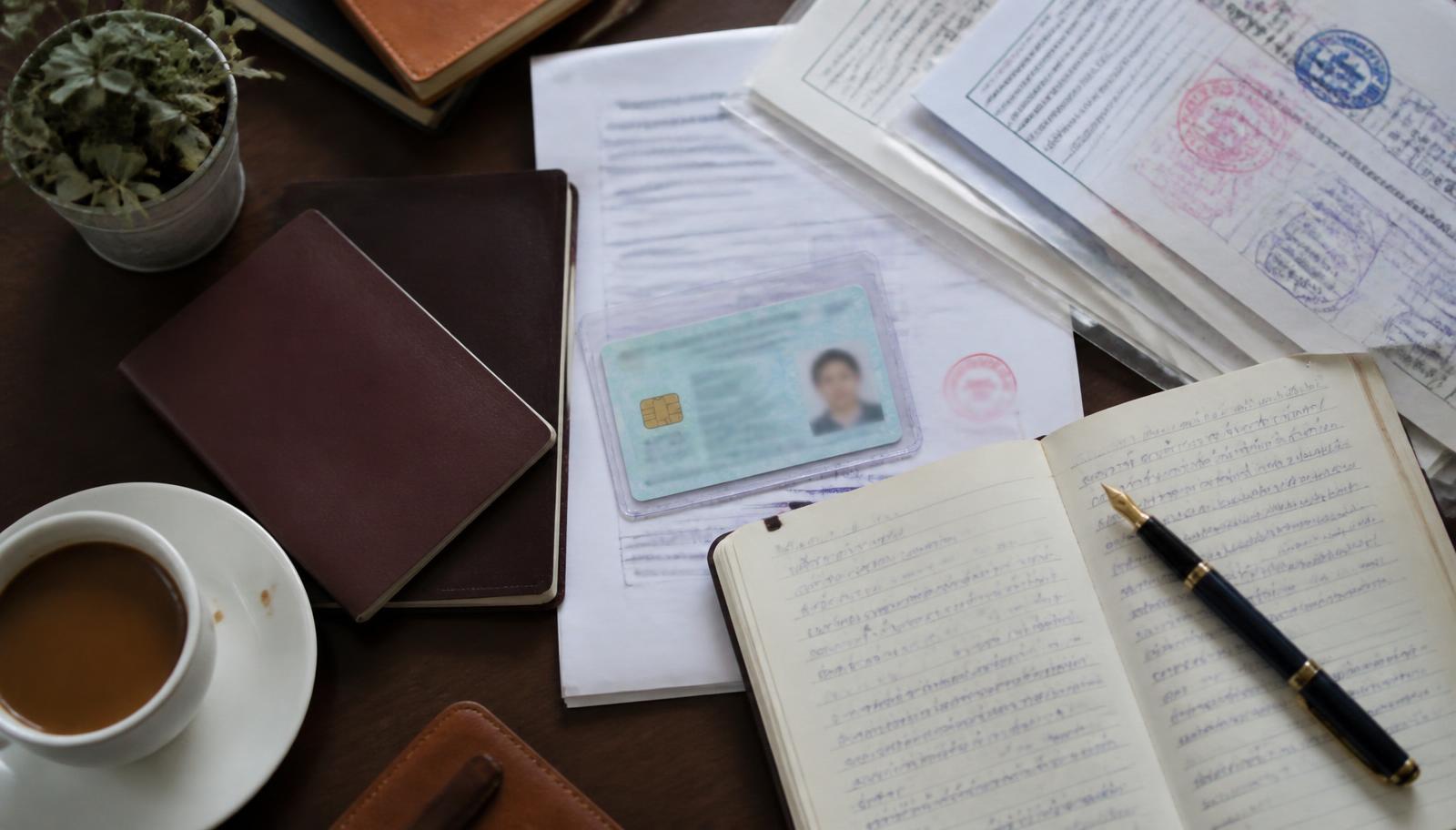
เอกสารราชการที่ประทับตรา หนังสือเดินทาง และสมุดบันทึกวางบนโต๊ะทำงาน
ชุดเอกสารประกอบที่มักใช้ยื่นพร้อมคำแปลรับรอง

แหล่งอ้างอิงจากหน่วยงานทางการ

ข้อมูลในหน้านี้อ้างอิงประกาศและระเบียบของหน่วยงานด้านล่าง ตรวจทานล่าสุด กรกฎาคม 2569 — ระเบียบอาจเปลี่ยนแปลงได้ โปรดตรวจสอบกับต้นทาง หรือสอบถามเจ้าหน้าที่ของเราทางโทรศัพท์ LINE หรืออีเมล

ตรวจสอบโดย ทีมบรรณาธิการ NYC Legal & Notary ฝ่ายเนื้อหาและมาตรฐานเอกสาร
ตรวจสอบล่าสุด: กรกฎาคม 2569 (2026-07-31)