LICENSED NOTARIAL SERVICES ATTORNEYS × 6
ทีมทนาย Notary Public 6 ท่าน · รับรองโดยสภาทนายความในพระบรมราชูปถัมภ์

Certified Translation in Thailand · 50 FAQs

Written by the NYC translation desk in Bangkok for expatriates, foreign employers and overseas applicants. Every answer is original to this page.

🧭 Basics, pricing and turnaround (10)

Q1. What does a "certified translation" mean in Thailand?

In Thailand there is no single sworn-translator register the way Germany or Spain has one. A certified translation means the translation carries the translator's declaration of accuracy plus the translation office's seal, signature and contact details. For official use the file then goes to the Legalization Division of the Department of Consular Affairs (Chaeng Watthana), whose stamp is what Thai and foreign authorities actually verify.

Q2. Do you charge per page or per word?

Standard civil-registry documents — birth certificates, house registration, marriage certificates, name-change records — are priced per document because their layout is fixed. Free-form text such as contracts, court judgments, audited accounts and medical reports is priced per source word. We confirm the method and the final figure in writing before any work starts, so there is no variable invoice at the end.

Q3. How fast can a translation be legalized?

Translation of one to three routine documents takes about one business day. Standard legalization at the Department of Consular Affairs takes two business days; the express counter returns documents the same day for a higher government fee. Realistically: three business days on the standard track, one to two on the express track, plus courier time if the documents leave Bangkok.

Q4. Can I handle everything remotely from abroad?

Yes for the translation stage — a 300 dpi scan is enough to start. Legalization, however, requires the physical original or a copy certified by the issuing authority. Most overseas clients courier the originals to our Bangkok office, we run the counter work under a letter of authorisation, and we ship the legalized set back by EMS or express courier with tracking.

Q5. Why do some translations get rejected at the counter?

Four recurring causes: names spelled differently from the passport, dates converted between the Buddhist and Gregorian calendars incorrectly, missing translation of stamps and marginal notes, and a source copy that was never certified by the issuing office. Each of these is a formatting problem, not a language problem, which is why a second reviewer checks every file before submission.

Q6. Which name spelling should the translation use?

Always the spelling printed in the machine-readable zone of the passport, even when it contradicts a phonetic transliteration or an older document. If earlier documents carry a different spelling, we add a translator's note referencing both forms so the reviewing officer can reconcile them without sending the file back.

Q7. Do you keep a copy if I lose the legalized set?

We archive the final bilingual file and the submission record for five years. That means a replacement set can be reproduced and re-legalized quickly without retyping, which matters when an embassy asks for an extra original at short notice.

Q8. Is a machine translation acceptable if I have it checked?

Not for anything that will be legalized. The Department of Consular Affairs is reviewing form, terminology and completeness against the source; machine output typically drops seals, handwritten annotations and registry numbering. Post-editing a machine draft also costs more than translating cleanly once the corrections are counted.

Q9. What file formats do you deliver?

A signed and sealed PDF plus the physical originals. Editable formats are supplied only for internal business documents that will not be legalized, because an editable certified translation cannot be authenticated later.

Q10. How do I get a firm quote quickly?

Send a legible scan of every page, tell us the destination country, and state the authority that will receive the document. Those three inputs determine the language pair, the certification route and the fee; without the destination, any quote is a guess and usually a wrong one.

👨‍👩‍👧 Personal and family documents (10)

Q1. Which documents do I need translated for a Thai marriage registration?

Typically your passport, an affirmation of freedom to marry issued by your embassy in Bangkok, and — if previously married — the divorce decree or death certificate of the former spouse. The embassy affirmation must be legalized at the Department of Consular Affairs together with its Thai translation before the district office will register the marriage.

Q2. My birth certificate is in a non-Latin script. Does that change anything?

It changes the reviewer pool, not the process. Documents in Arabic, Chinese, Japanese, Korean, Russian, Burmese and similar scripts are handled by translators working in that script directly into Thai, never through an English pivot, because pivoting doubles the chance of a name or date drifting.

Q3. How are Buddhist-era dates handled?

Thai official documents use the Buddhist Era (BE = CE + 543). Translations into foreign languages convert to the Gregorian calendar and keep the original BE figure in brackets. Translations into Thai do the reverse. Keeping both figures visible is what stops an officer from suspecting an alteration.

Q4. Do I need my house registration (tabien baan) translated?

Only when the receiving authority asks for proof of residence or family composition — common for spouse visas, school enrolment abroad and inheritance matters. The whole booklet page is translated including the handwritten entries and the registrar's stamps, not just the printed fields.

Q5. What about academic transcripts and diplomas?

Universities abroad usually want the transcript, the degree certificate and a grading-scale explanation. We translate the grading legend as well, because a Thai 4.00 scale is not self-explanatory. If the institution requires sealed delivery, the translation is placed in the same sealed envelope as the certified source copy.

Q6. Can medical records be translated for treatment abroad?

Yes, and this is the one area where terminology review matters most. Diagnoses are rendered using ICD terminology, drug names use the international non-proprietary name with the Thai brand in brackets, and dosage units are never converted silently. Hospitals accept the file more readily when the source structure is preserved page for page.

Q7. Is a translated driving licence enough to drive abroad?

A certified translation helps at a rental counter but does not replace an International Driving Permit where one is legally required. For residence applications in countries that convert Thai licences, the translation must be legalized and often accompanied by a Department of Land Transport record of the licence.

Q8. How do adoption files get handled?

Adoption paperwork is treated as a bundle: court order, consent forms, social-welfare report and the child's civil-registry documents. They are translated by the same translator to keep names, dates and relationship terms identical across the set, since inconsistency between documents in an adoption file is the fastest route to rejection.

Q9. Do I need to translate my police clearance certificate?

Yes when the destination country's authority does not read the issuing language. A Thai police clearance heading abroad needs a legalized translation; a foreign clearance used in Thailand needs authentication in the issuing country plus a Thai translation legalized here.

Q10. What if my document has a handwritten note in the margin?

It is translated and labelled as a marginal annotation, with a note about the handwriting being partially illegible if that is the case. Omitting margin notes is treated as an incomplete translation and is a documented rejection reason.

🏢 Corporate, financial and legal (10)

Q1. Which company documents most often need certified translation?

Affidavit of company registration, memorandum and articles of association, shareholder list, board resolutions, VAT registration, financial statements and powers of attorney. For a foreign parent opening a Thai subsidiary, the same set travels in the opposite direction and must be authenticated in the home country first.

Q2. How is terminology kept consistent across a large corporate set?

We build a project glossary before translating: company name forms, officer titles, share classes, statutory references. Every file in the batch is then produced against that glossary and checked by one reviewer, so the entity name never appears in two variants across a filing bundle.

Q3. Are financial statements translated by accountants?

They are translated by linguists with accounting background and reviewed against Thai Financial Reporting Standards line naming. Figures are never re-formatted: thousand separators, negative-value brackets and currency symbols stay exactly as printed so an auditor can reconcile the pages side by side.

Q4. Can you translate contracts that will be signed bilingually?

Yes, and we recommend a governing-language clause stating which version prevails. The layout is delivered in parallel columns or mirrored clause numbering so that any later amendment can reference the same clause number in both languages.

Q5. What about court judgments and litigation bundles?

Court documents are translated verbatim including procedural headers and case numbering, with no summarising. Where a Thai legal concept has no equivalent, the term is kept in transliteration with an explanatory footnote rather than being replaced by an approximate foreign term.

Q6. Do patent and trademark filings need special handling?

Yes. Claim language is translated with strict structural fidelity because scope of protection depends on wording. We keep claim numbering, dependency references and defined terms intact, and flag any source ambiguity to the agent instead of resolving it silently.

Q7. How are powers of attorney handled for cross-border use?

The POA is drafted or translated, notarised by a Notarial Services Attorney in Thailand, then legalized at the Department of Consular Affairs and the destination embassy if that country is outside the Apostille Convention. Getting the order wrong forces the whole chain to be repeated.

Q8. Can you sign an NDA before receiving our files?

Yes. Corporate clients routinely sign a mutual NDA first, and we can work on a restricted-access basis where only the assigned translator and reviewer see the material. Files are purged from working storage on request after delivery.

Q9. Do you handle tender documents on a deadline?

Tender packs are scheduled as a project with a named coordinator, a per-file delivery timetable and a fixed cut-off for source changes. Late source amendments are quoted separately so a last-minute annex does not silently push the whole submission past the deadline.

Q10. Is there a discount for repeat corporate volume?

Repeat clients benefit from translation-memory reuse: previously approved segments are re-used at a reduced rate, which typically cuts cost on annual filings where only figures and dates change year to year.

🌐 Language-specific questions (10)

Q1. Which languages can be legalized in Thailand?

The Department of Consular Affairs certifies Thai–English and Thai–foreign-language translations for a wide range of languages, but the practical constraint is whether a qualified translator for that pair is available. Common European and East Asian languages are routine; rarer pairs may require routing through an accredited translator abroad, which we arrange when needed.

Q2. Do you translate directly between two foreign languages?

Yes for information purposes, but for Thai official use the document normally has to exist in Thai. A Japanese-to-German document destined for a Thai authority is therefore produced as a Japanese-to-Thai legalized version plus a German reference version.

Q3. Is Simplified or Traditional Chinese used?

Simplified for mainland China authorities, Traditional for Taiwan, Hong Kong and Macau. Using the wrong variant is a common rejection reason at consulates, so the destination is confirmed before the file is typeset.

Q4. How are Arabic documents handled?

Right-to-left layout is rebuilt rather than pasted, dates in the Hijri calendar are converted with the original retained in brackets, and names are transliterated to match the passport. Documents destined for Gulf states usually also require embassy legalization after the consular stamp.

Q5. What about Japanese and Korean family registers?

Koseki and Korean family relation certificates are translated in full, including all historical entries, because authorities use those entries to establish relationship history. Partial extracts are only acceptable when the receiving office asks for them in writing.

Q6. Do you cover Southeast Asian languages such as Burmese, Khmer and Lao?

Yes — these are frequent for labour, marriage and civil-registry matters in Thailand. The main challenge is source legibility, so we ask for the clearest possible scan and flag illegible sections rather than guessing at names.

Q7. Can you provide NAATI-certified translation for Australia?

Australian authorities generally require NAATI-certified translation. That is a separate accreditation from Thai consular certification, so documents heading to Australia are produced on the NAATI track, while the Thai-side legalization is added only if a Thai authority also needs the file.

Q8. What if my language pair is very rare?

We confirm translator availability before accepting the job and quote a realistic timeline rather than a default one. Rare pairs often need an extra day for independent review because there are fewer qualified reviewers available.

Q9. Are dialect differences taken into account?

For Portuguese, Spanish and French we match the destination variant — European versus Brazilian Portuguese, or Canadian versus European French — since terminology for civil-status concepts differs enough to cause queries at the counter.

Q10. Can the same document be issued in several languages at once?

Yes, and it is cheaper done together: the source is analysed once and each target language is produced from the same approved reading, which also guarantees the versions agree with each other.

🛡️ Legalization, Apostille, troubleshooting (10)

Q1. Does Thailand issue Apostilles now?

Thailand acceded to the Hague Apostille Convention, and once it is operational for your document type an Apostille replaces the double embassy step for member states. Until an individual case is confirmed as eligible we still plan the conventional consular route as a fallback so a deadline never depends on a transitional rule.

Q2. What is the correct order: translate first or legalize first?

For Thai documents going abroad: certify the source copy, translate, legalize the translation, then embassy or Apostille. For foreign documents used in Thailand: authenticate in the country of origin first, then translate into Thai here, then legalize. Reversing these steps voids the chain and the work must be redone.

Q3. My document was rejected. What happens next?

We obtain the counter's reason, correct the file and resubmit at our cost when the fault is ours. Government fees already paid are not refundable, which is why the pre-submission review exists in the first place.

Q4. Do embassies in Bangkok have their own translation rules?

Several do — some accept only translations from their own approved list, some require the translation on the same physical staple as the source, some require an additional declaration form. We check the current requirement of the specific embassy before producing the file rather than assuming a general rule.

Q5. How long is a legalized translation valid?

The stamp itself does not expire, but receiving authorities often require documents issued or legalized within three to six months. For civil-status documents that can change — marital status, criminal record, residence — plan on a fresh set rather than reusing an old one.

Q6. Can a translation be legalized without the original?

No. The counter compares the translation against the original or an officially certified copy. Photocopies certified by the applicant or by a private office are not accepted for that purpose.

Q7. What if the source document itself contains an error?

The translation must reflect the source, errors included, with a translator's note. The error has to be corrected at the issuing authority; a translator who silently fixes a wrong date has produced a document that no longer matches its source and will fail verification.

Q8. Do you handle the embassy submission as well?

Yes for most embassies in Bangkok, subject to their appointment and representation rules. Some require the applicant in person; we tell you which category yours falls into at the quoting stage instead of after payment.

Q9. Is notarisation the same as legalization?

No. A Notarial Services Attorney certifies signatures, copies and declarations for use abroad. Legalization is the state-level authentication that follows. Many destinations require both, in that order, and each has its own fee.

Q10. Who should I contact for a complex multi-country case?

Send the full picture — every document, every destination, every deadline — to the translation desk in one message. Complex chains are planned backwards from the final deadline, and the biggest avoidable cost in this work is discovering a missing authentication step halfway through.

⚖️ Sworn and certified translator regimes (10)

Q1. Does Thailand have a sworn translator register?

No. Thailand does not maintain a court register of sworn translators the way Germany, France or Spain do. The Thai equivalent is a translator's accuracy statement plus the translation office seal, which is then legalised by the Legalisation Division of the Department of Consular Affairs. That consular stamp is what foreign authorities actually verify, so a request for a sworn translation should be read as a request for an officially legalised translation.

Q2. Home Affairs in Australia asked for a NAATI translation. Is a Thai consular stamp enough?

No, they are different things. Australian agencies expect the translation itself to carry a NAATI-certified translator's stamp and CPN number. Thai consular legalisation authenticates the Thai original and its signatures. Many applications need both: the Thai document legalised, and the translation produced under NAATI certification.

Q3. Germany asked for a beeidigter Übersetzer. What is the cheapest safe route?

Get the Thai original fully legalised in Thailand first, including an English translation for reference, then have a court-appointed translator in Germany produce the German version. Doing it in the other order often means paying twice, because the German registry office may not accept a translation produced outside its register.

Q4. Are France, Spain and Italy the same as Germany?

Similar in principle, different in detail. France usually requires a traducteur assermenté attached to a court of appeal, Spain a traductor jurado appointed by its foreign ministry, and Italian requirements vary between courts and consulates. Because consulates sometimes accept translations legalised in the country of origin, always confirm with the specific receiving office in writing.

Q5. Which countries generally accept an English translation legalised in Thailand?

Authorities that work in English, and many international education, licensing and employment bodies, generally accept an English translation legalised through the Thai consular chain. Continental European civil registries and courts more often want the document in their own official language, produced by a translator on their register.

Q6. Japan and Korea: what usually causes problems?

Not the translator's credentials but consistency. Name transliteration must match the passport exactly, and Thai Buddhist-era dates must be converted to the Gregorian calendar in the translation. Mismatches between an earlier visa record and the new translation are the most common reason a counter sends the file back.

Q7. Simplified or traditional Chinese?

Mainland China uses simplified characters, Hong Kong and Taiwan use traditional. Sending the wrong script gets a file refused at the counter even when the content is correct, so we confirm the destination before typesetting. China is an Apostille Convention party, which shortens the chain for documents moving between Thailand and China.

Q8. Middle East destinations: Apostille or embassy legalisation?

It has to be checked country by country. Some states in the region have joined the Apostille Convention and others still run a full embassy legalisation chain. Treating the whole region as one rule is what costs applicants weeks, so we verify current convention status and the specific embassy's published requirements before planning the file.

Q9. What if you are not registered as a sworn translator in my destination country?

We say so up front. The usual solution is to complete the Thai side fully and correctly, then hand a clean legalised set to a registered translator in the destination, or to coordinate one through our network. That keeps the part governed by Thai procedure with us and the part governed by foreign court rules with someone on that register.

Q10. How do I find out exactly what my receiving office wants?

Ask them in writing and keep the answer: a checklist page, an email, or the form section that names the translation type. Send that to us with photos of your documents and we will convert it into a step-by-step plan with checkpoints, rather than guessing from general rules that vary by office.

📑 Specialist documents: medical, academic, court (10)

Q1. How should medical records be translated for a foreign insurer or immigration office?

Diagnostic terms and international classification codes stay alongside the translation, physician names and licence numbers are preserved, and no clinical interpretation is added. Reviewers usually read the translation line by line against the original, so the layout mirrors the source page structure.

Q2. What do credential evaluators check first on transcripts and degrees?

Three things: the official programme and degree titles as the institution publishes them, the grading scale left unconverted, and the registrar's seal and signature described in the translation. Converting Thai grades into a foreign scale is a common and avoidable reason for a query.

Q3. Do court judgments have to be translated in full?

In practice yes. Receiving authorities need the reasoning and the operative part, and partial translations are routinely rejected. Where a case file is large we add a translated index with page references matching the original bundle so the reviewing officer can navigate it quickly.

Q4. What should a bilingual contract state explicitly?

Which language version prevails if the two conflict. That single clause prevents most bilingual contract disputes. Clause numbering, defined terms and tables must also match exactly across versions, which is why we build a glossary before translation starts.

Q5. Do financial statements need a specialist translator?

Yes, someone familiar with chart-of-accounts terminology and financial reporting standards. Mistranslated account names distort how a foreign reader reads the company's position. Figures and currencies stay as issued, no exchange-rate conversion is applied, and every note to the accounts is translated.

Q6. How are patent and trademark documents handled?

With strict terminological consistency: the same term is rendered the same way throughout the family of documents, and application numbers, filing dates and claim wording are preserved literally. Smoothing the language of a claim can change the scope of protection, so it is not done.

Q7. Anything special about tender documents for foreign government contracts?

Tenders fix the format, the number of copies and the deadline, and usually require the legalisation chain to be complete before the submission date. Plan backwards from the deadline and treat authority queue times, not translation time, as the binding constraint.

Q8. How recent must company registration documents be?

Many receiving authorities require a certificate issued within a set recent period. Request a fresh extract before starting legalisation rather than reusing an older copy, because if it ages out at the destination the whole chain has to be repeated.

Q9. Do handwritten notes and stamps need translating?

Yes, including stamp text and marginal notes. Anything visible on the original but absent from the translation looks like withheld information. Where text is genuinely illegible we mark it as illegible with its location rather than guessing.

Q10. Are digitally signed electronic documents accepted?

It depends on the receiving office. Some accept files whose signature can be verified through the issuer's system; others still require a printed copy bearing a wet seal. The safe preparation is both: the verifiable source file with its check link, and a printed copy certified by the issuing authority.

🔗 Legalisation chain and the Apostille route (10)

Q1. What changed now that Thailand is an Apostille Convention party?

Thailand deposited its instrument of accession on 30 June 2026 and the convention enters into force for Thailand on 28 February 2027 (source: HCCH); until that date the existing legalisation chain still applies. For documents going to another convention country, an Apostille certificate can replace legalisation by that country's embassy in Bangkok, removing one step. Documents destined for non-party countries still follow the full embassy legalisation chain.

Q2. Does an Apostille cover the translation as well as the original?

An Apostille authenticates the origin of the signature and seal on the document presented. If the translation itself has to be covered, the certifier's signature on the translation must first enter the certification process. Sequence matters more than speed here, so confirm with the receiving authority which document needs the Apostille.

Q3. How do I bring a foreign document into use in Thailand?

Certify it in the country of origin first, by Apostille if that country is a convention party, or through its own authorities plus the Royal Thai Embassy there if it is not. Then translate it into Thai and have the translation legalised by the Department of Consular Affairs before filing with the Thai office, court or immigration bureau that needs it.

Q4. Why is an embassy still asking for legalisation when both countries are parties?

Internal rules at receiving offices do not update simultaneously, and some categories of document fall outside the convention's scope. Check the receiving authority's current published requirement and follow the route it actually states rather than the route the convention permits in theory.

Q5. Does consular legalisation always need the original document?

As a rule you need the original or a copy certified by the issuing authority; a plain photocopy is not enough. If the original is abroad, request a fresh issue from the issuing office or complete certification in the country of origin before shipping it.

Q6. Is there any advantage to filing myself instead of using an agent?

Legally the result is identical. The difference is queue handling and fixing paperwork on the spot. If you file yourself, verify the document list and forms before travelling. We act under a power of attorney within each authority's own rules; we are not an official representative of any government office.

Q7. Do government fees change?

Legalisation fees follow published announcements from the Department of Consular Affairs and can be revised, so check the official site before proceeding. We charge the rate in force on the day of filing and hand over the authority's receipt.

Q8. Can one set of documents serve several countries at once?

Order multiple original extracts at the start and run a separate chain for each destination. A set already legalised for one country generally cannot be re-legalised for another, so deciding how many sets you need at the beginning saves the most time.

Q9. How long does the whole chain take?

The Thailand-side steps typically take a few working days. Embassy steps vary widely between missions, from a few days to several weeks, depending on their rules and queue. Any precise figure has to be confirmed with that mission at the time of filing.

Q10. My deadline is tight. What should I prioritise?

First check whether the receiving office accepts a certified copy or an interim electronic file. Then accelerate what is under our control, namely obtaining fresh source documents and translation, and book expedited legalisation where the authority offers it. Embassy steps are the least compressible and should be treated as the plan's hard constraint.

🛠️ Names, rejections and quality control (10)

Q1. Which spelling of my name goes into the translation?

The passport spelling, always, because that is what the receiving office uses to identify you. If older documents spell it differently, tell us at the start so we can add an explanatory note rather than silently choosing one variant.

Q2. I changed my name after the document was issued. What do I attach?

Include the change-of-name or change-of-surname certificate, translated and legalised in the same set, so the destination can link both records to one person. Submitting only the main document is a frequent rejection cause in visa and family registration files.

Q3. Do Buddhist-era dates get converted?

Yes, and the translation states that the date was converted from the Buddhist era. Year errors are serious because they affect document-age rules and the chronology of a case or application.

Q4. Should Thai authority names be translated or transliterated?

We use the authority's own official English name where one exists and never invent one. Where none exists, we give a literal translation with the transliteration in brackets so the reviewing officer can locate the office and verify the document.

Q5. What are the most common reasons files come back?

Name spelling not matching the passport, scans too poor to read reference numbers, documents older than the destination allows, stamps or marginal notes left untranslated, and legalisation steps performed out of order. All five are formal issues that a pre-submission review catches.

Q6. If a file is rejected, does everything start again?

Not always. If the fault is in the translation, usually only the translation is corrected and that step re-filed. If the fault is in the source document, for example it has aged out or the copy was not certified by the issuer, a fresh document and a full chain are needed. We work from the authority's written rejection notice before changing anything.

Q7. What quality control runs before delivery?

Every file passes a primary translator and a second reviewer who checks a fixed list: personal names, dates, registration numbers, seals and page completeness, then terminology consistency against the job glossary, before the certificate of accuracy is issued.

Q8. When can I review the translation myself?

Before legalisation, because changes after legalisation require re-filing. We send a draft for you to confirm name spellings, addresses and personal details. This step is short and removes the largest share of rejection risk.

Q9. Do you keep copies for future requests?

We retain translation files and job records so additional copies or follow-on documents keep the same terminology. Issuing a newly legalised copy still requires the original under the authority's rules, but you will not pay to have the same text translated twice.

Q10. Can you guarantee my document will be accepted?

No provider can guarantee a decision by a government or foreign authority. What we are accountable for is translation accuracy, following each step in the order the regulations require, and correcting and re-filing at our cost when the error is ours. That is a scope you can verify.

Still have a question?

Send us the documents and the destination authority — we map the route before you pay.

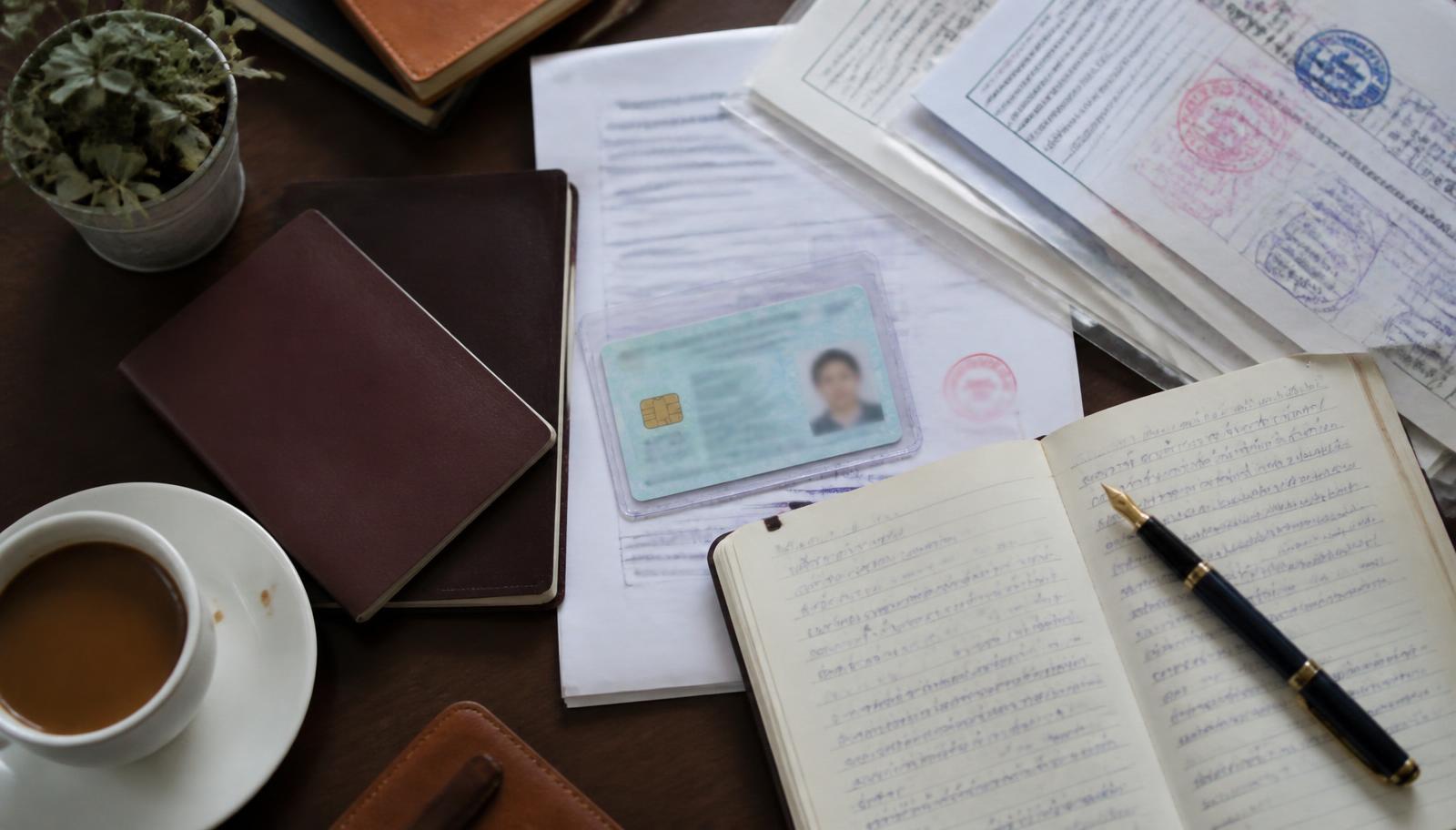
เอกสารราชการที่ประทับตรา หนังสือเดินทาง และสมุดบันทึกวางบนโต๊ะทำงาน
ชุดเอกสารประกอบที่มักใช้ยื่นพร้อมคำแปลรับรอง

แหล่งอ้างอิงจากหน่วยงานทางการ

ข้อมูลในหน้านี้อ้างอิงประกาศและระเบียบของหน่วยงานด้านล่าง ตรวจทานล่าสุด กรกฎาคม 2569 — ระเบียบอาจเปลี่ยนแปลงได้ โปรดตรวจสอบกับต้นทาง หรือสอบถามเจ้าหน้าที่ของเราทางโทรศัพท์ LINE หรืออีเมล

ตรวจสอบโดย ทนายวิวัฒน์ ทนายความผู้ทำคำรับรองลายมือชื่อและเอกสาร
ตรวจสอบล่าสุด: กรกฎาคม 2569 (2026-07-31)